Indian Journal of Clinical Anatomy and Physiology
Indian Journal of Clinical Anatomy and Physiology (IJCAP) is an open access, peer-reviewed medical quarterly journal, published since 2014 under the auspices of the Innovative Education and Scientific Research Foundation (IESRF), which aims to uplift researchers, scholars, academicians, and professionals in all academic and scientific disciplines. we will be publishing articles ‘Ahead of Print’ immediately upon acceptance of manuscript. In addition, the journal allows free access (Open Access) to its contents, which is likely to attract more readers and citations to articles publishe...
Perceptions of histology amongst undergraduate medical students
Abstract
Introduction: Histology is a pivotal subject in medical education, yet it is frequently perceived as challenging by undergraduate students. Understanding the factors contributing to these perceptions is essential for optimising teaching strategies and enhancing student learning outcomes
Objective: The study done is based on the challenges, and attitudes of undergraduate medical and allied health students towards histology, and to analyse the scope and academic performance in the subject.
Materials and Methods: A cross-sectional elaborated and well analysed survey was conduct among 172 undergraduate students at Manav Rachna Dental College, encompassing various academic years and disciplines. Data were collected using a validated, structured questionnaire addressing demographic details, attitudes, perceived difficulties, relevance to clinical practice, and suggestions for pedagogical improvement.
Results: While a majority of students expressed interest in histology, most reported significant difficulties, particularly in drawing diagrams, understanding theoretical concepts, and microscopic identification of tissue structures. Topics such as epithelium, muscle, bone, cartilage, and nervous tissue were identified as especially challenging. The primary barrier cited was the disconnect between diagrammatic representations and actual microscopic images (69.8%). Despite these challenges, nearly three-quarters of respondents recognised the clinical relevance of histology. Preferences for enhanced practical exposure and integration with anatomy were commonly suggested to improve learning outcomes.
Conclusion: Undergraduate students perceive histology as a complex subject due to both intrinsic content challenges and pedagogical factors, notably the gap between theoretical and practical components.
1. Introduction
Histology, a foundational subject in medical education, plays a critical role in understanding the microscopic structure of tissues and organs, which is important to be used further in clinical practice. However, undergraduate medical students often perceive histology as a challenging discipline due to the complexity of tissue identification, specialised terminology, and limited instructional time. The research conducted by Garcia et al. (2019)[1] gives an overview of difficulties by exploring students' perspectives on learning histology. Their study, involving a comprehensive questionnaire administered to undergraduate biology students, identified specific tissue types such as nervous, bone, and glandular epithelial tissues as particularly problematic. Moreover, students attributed their challenges to the intrinsic nature of the subject, the difficulty in mastering histological terminology, and insufficient teaching hours. Importantly, the study also highlights students’ suggestions for improving histology education, including incorporating more practical tasks, curriculum content reduction, integration with anatomy, and enhancing engagement strategies. This research undergoes in depth of the challenges and solutions which can be suggested to the respective department.[1][2][3][4]
This research aims to explore the perceptions of histology among undergraduate students, particularly those in health-related programs such as medicine, nursing, and biomedical sciences. By examining student’s attitudes, experiences, and challenges with histology, this study focuses to overcome all the challenges that influence their understanding and engagement with the subject. Additionally, the research will explore how these perceptions may impact student’s academic performance and interest in pursuing careers that require histological knowledge.
Finally, by eliciting student perceptions of difficult subjects, teachers can also develop new insights into the strengths and weaknesses of their teaching methods.[5][6]
The guiding hypothesis of the present study is that histology is intrinsically difficult for students due to the nature of the subject itself because of not enough interest developed by students and interpretation of histological images, and the hypothetical images one needs to create in their mind to understand better. The purpose of the present study is to overcome the challenges faced by students and help them gain interest in this subject more. Understanding students’ views and learning difficulties within histology will aid teachers to understand their perspective and help them gain interest through different teaching methods. Moreover, these approaches will create an important impact on the medical education and students.[7][8]
2. Objective
2.1. Histology perception amongst medical students
2.1.1. Review of literature
The perceptions of histology among undergraduate (UG) medical students have become a focal point in medical education research[9], as student attitudes directly influence engagement, learning outcomes, and interest in related specialties. The literature reveals a complex interplay between curricular structure, teaching methodologies, perceived clinical relevance, and career aspirations.[10][11]
2.2. Student attitudes toward histology
Histology as a Foundational Subject: Most studies confirm that dental students recognise the importance of histology for understanding oral biology and disease mechanisms.[12] A significant proportion of medical students agree that histology knowledge is essential for clinical practice and diagnosis. Interest and Engagement: Despite acknowledging its importance, only a minority of students express genuine interest in histology as a subject or a career. For instance, a cross-sectional study in India found that while 33.5% of students found histology interesting, 24.5% focused only on passing the subject, and 64% did not intend to pursue it as a specialty.[13]
2.3. Perceived relevance and Integration
Clinical integration: Students frequently report a disconnect between basic histological concepts and their application in clinical settings. Integration of histology with pathology and clinical subjects is widely supported[6], with more than half of surveyed students believing this would enhance understanding and retention. Curricular reforms: Studies emphasise the need for vertically integrated curricula, where histological concepts are revisited in clinical contexts throughout the medical program. Such integration is associated with improved appreciation of histology’s practical value and greater student engagement.
2.4. Teaching methodologies
Traditional vs. Modern Approaches: Traditional didactic lectures and slide-based practicals remain common, but students increasingly favour interactive and technology-enhanced methods. [3]The use of digital resources, virtual microscopy, and various tools has been shown to improve comprehension and engagement.[10]
Innovative strategies: Problem-based learning (PBL), case-based learning, and flipped classrooms are gaining traction as effective strategies for teaching histology. These methods will help in coming up with better results in interest of the subject and overcoming all the challenges, leading to better learning outcomes.
Assessment preferences: Continuous assessments, formative feedback, and the use of multiple-choice questions are preferred by students for evaluating cognitive skills, as they provide regular opportunities for self-assessment and improvement.[4]
2.5. Challenges and barriers
Perceived difficulty: Many students find practical histology more challenging than theoretical aspects, often due to the abstract nature of microscopic structures and lack of immediate clinical application.[5] Career prospects: Histology and oral pathology are often perceived as nonclinical specialties with limited scope for advancement and financial reward.[6] This perception significantly reduces student interest in pursuing these fields as careers, despite their academic importance. Gender and year of study: Some studies note no significant gender differences in attitudes, but academic year can influence perceptions, with more senior students often appreciating the relevance of histology after clinical exposure.
2.6. Recommendations from literature
Curriculum enhancement: Ongoing curriculum evaluation and reform are recommended to ensure alignment with student needs and evolving clinical practice.[11]
Integration with genetics and emerging fields: Recent literature puts more emphasis on genetics and molecular biology into histology teaching to reflect advances in medical science and enhance clinical relevance.[7]
Mentorship and career guidance: Providing mentorship and exposure to research opportunities in histology and related fields may encourage more students to consider these specialties.
3. Materials and Methods
3.1. Study design
A cross-sectional descriptive study was conducted to assess the perceptions of undergraduate students regarding histology as a subject within their medical or allied health curriculum. The study aimed to identify trends in student attitudes, perceived relevance, challenges, and preferred teaching methods associated with histology.
3.2. Study population
The study population comprised undergraduate students enrolled in the Manav Rachna Dental College including those from medicine, dentistry, and allied sciences. Participants from all academic years were invited to participate, although emphasis was placed on those who had completed at least one semester of histology.
3.3. Sample size and sampling technique
A sample size of 200 was determined considering representation across different college students. Participation was voluntary, and informed consent was obtained from all respondents.
3.4. Data collection tool
Data was analysed using a preformed questionnaire the permission for which was sought before using it of an author and validated through faculty of Manav Rachna Dental College and 5-6 students. The questionnaire included both closed- and open-ended questions, covering:
Demographic details (age, gender, program, year of study) Perceptions of the importance and relevance of histology Attitudes toward histology as a subject Perceived challenges in learning histology Preferences for teaching and assessment methods Suggestions for improvement
3.5. Quality control
he questionnaire was pre- validated from a previous study and modified according to the present study.
3.6. Confidentiality
It was maintained by non-disclosure of names of the participants.
3.7. Ethical considerations
The permission to conduct the study was sought by Indian Council of Medical Research.
3.8. Data collection procedure
The questionnaire was distributed online via Google Forms over a period of 8 weeks Participation was anonymous, and confidentiality of responses was assured. Data were collected over a period of 8 weeks.
4. Results
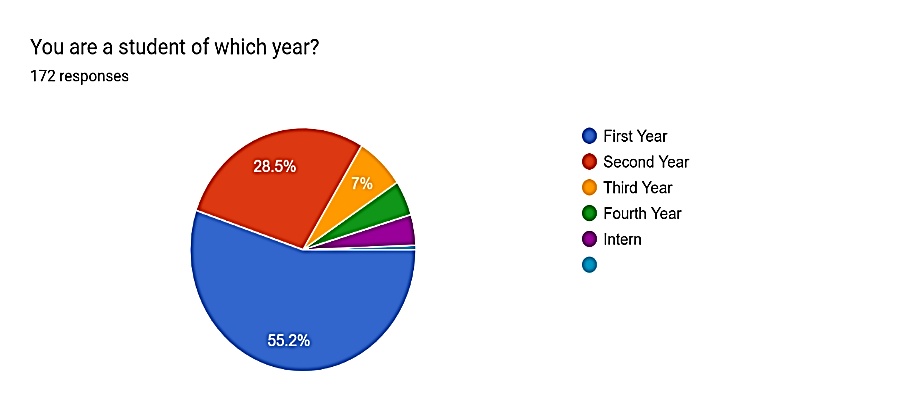
A total of 172 medical students, spanning various academic levels from first year through internship, participated in the survey assessing perceived challenges in learning histology.
4.1. Student demographics
Respondents were distributed across all academic years as follows:First Year, Second Year, Third Year, Fourth Year, and Internship. This representation enabled a comprehensive assessment of histology-related learning difficulties at different stages of undergraduate medical training. [Figure 1]
4.2. Interest in histology
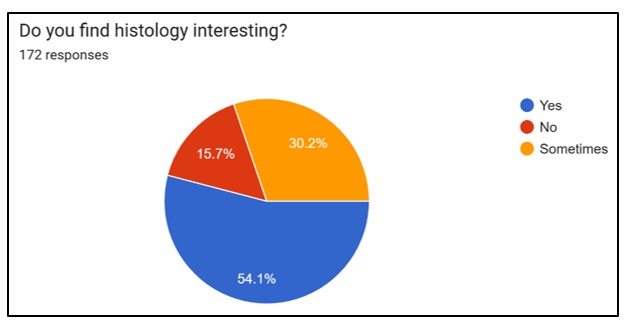
When questioned about their interest in histology the following were concluded:
Most students indicated that they found the subject interesting. A considerable portion selected “Sometimes”, reflecting conditional or context-dependent engagement. A smaller subset reported a lack of interest (“No” responses).
These responses suggest that while interest in histology is generally positive, engagement may vary based on factors such as content delivery and perceived relevance. [Figure 2]
4.3. Perceived difficulty in learning histology
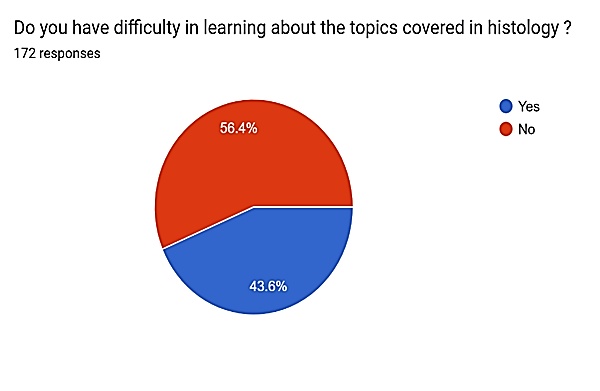
Most participants acknowledged encountering difficulty in learning histology. These challenges varied depending on the topic, content complexity, and mode of instruction, indicating a non-uniform distribution of perceived difficulty. [Figure 3]
5. Challenging Aspects of Histology Learning
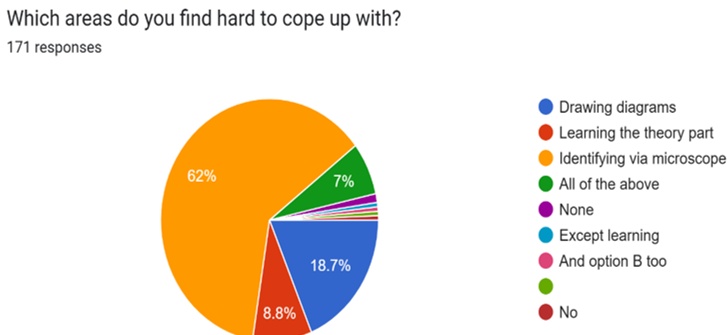
Students identified the following as particularly challenging:
Drawing histological diagrams Understanding theoretical concepts Microscopic identification of tissue structures
A significant proportion selected “All of the above”, suggesting a multifactorial struggle encompassing both theoretical and practical components of the subject. [Figure 4]
6. Difficult Topics in Histology
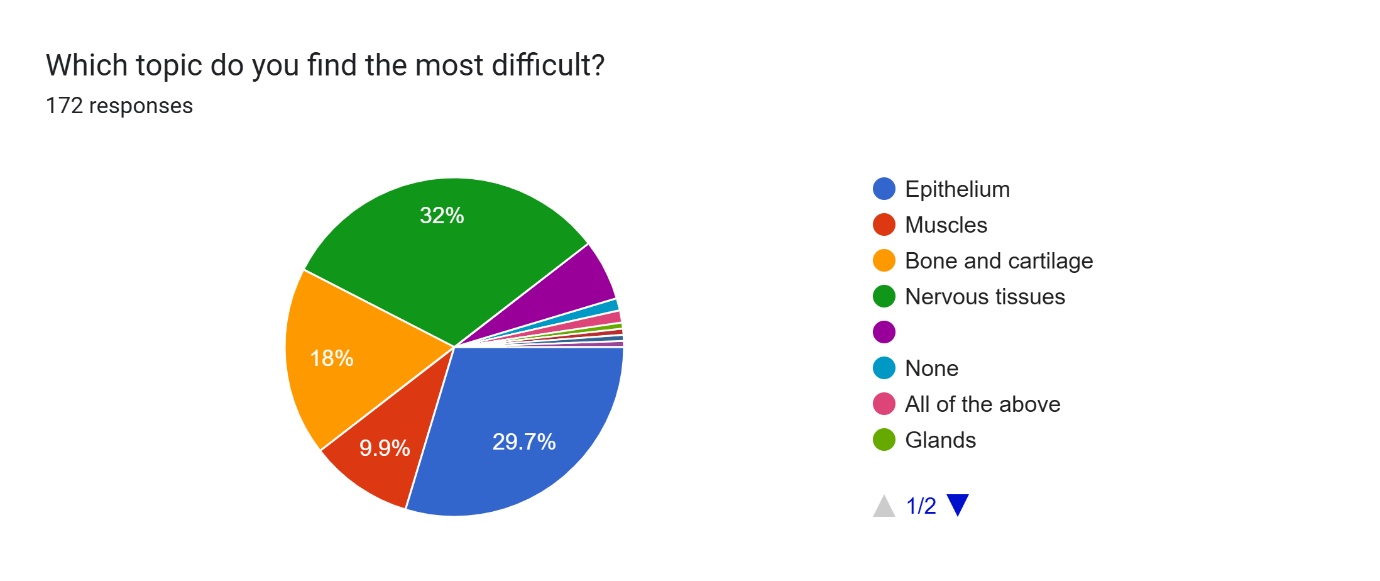
The most frequently reported difficult topics included:
Epithelium Muscle tissues Bone and cartilage Nervous tissue Glandular structures
Systemic slides, particularly those of lungs, trachea, and other visually similar organs. These findings highlight the complexity students face when distinguishing structurally similar or intricately organised tissues under the microscope. [Figure 5]
7. Microscopic Slide Identification
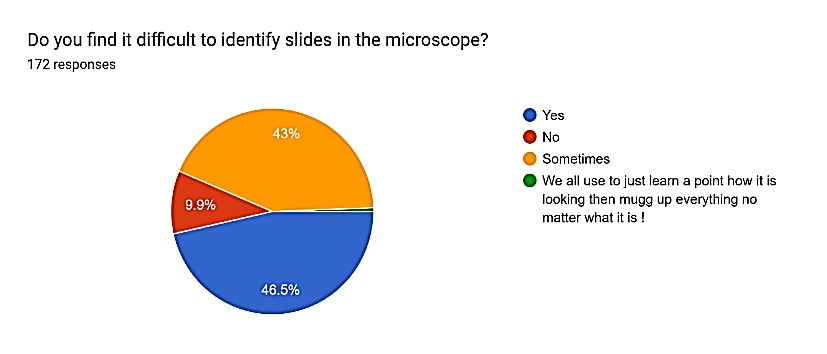
When queried about challenges in identifying slides under the microscope:
The majority responded “Yes” or “Sometimes” A minority reported no difficulty
This trend reflects low confidence and uncertainty in practical microscopic skills among a significant proportion of students. [Figure 6]
8. Main Reasons for Difficulty in Understanding Histology
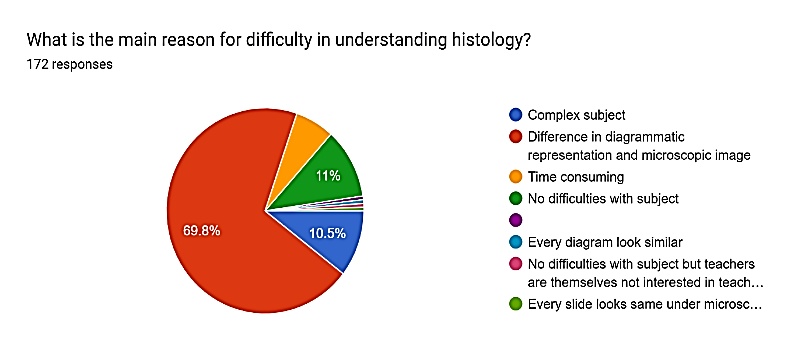
Out of 172 responses, the most cited challenge (69.8%) was the difference between diagrammatic representation and microscopic images, indicating a strong disconnect between theoretical learning and practical identification. A smaller segment (11%) found every diagram looking similar, contributing to confusion. Interestingly, only 10.5% found the subject inherently complex, and 8.7% reported no difficulties at all, suggesting that pedagogical issues rather than subject complexity itself might hinder understanding. [Figure 7]
9. Perceived Relevance of Histology in Clinical Practice
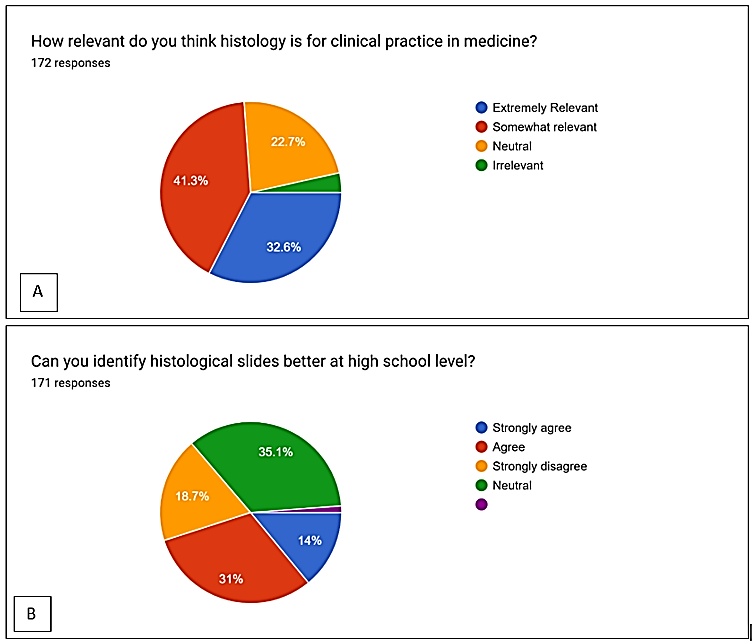
Most medical students acknowledged the importance of histology in clinical settings. Specifically, 41.3% of respondents considered histology to be somewhat relevant, while 32.6% rated it as extremely relevant. This indicates that nearly 74% of the cohort recognised its clinical significance to varying extents. On the other hand, 22.7% of students were neutral, and only 3.5% considered it irrelevant, highlighting that a very small fraction questioned its practical applicability in medical practice. [Figure 8]a
10. Slide Identification at the High School Level
Regarding the ability to identify histological slides during high school, responses were mixed. While 31% agreed and 14% strongly agreed for the option that stated that they would have done better at school level, a significant portion (35.1%) remained neutral, potentially reflecting a lack of exposure to histology at that stage. Meanwhile, 18.7% strongly disagreed, suggesting they found histology more comprehensible only after entering medical school. [Figure 8]b
A survey involving 172 medical students from all undergraduate students explored the challenges they face in learning histology. Most students found histology interesting, though some reported only conditional engagement or a lack of interest, indicating that enthusiasm for the subject varies. The majority acknowledged significant difficulties in learning histology, with challenges linked to both theoretical understanding and practical skills, such as drawing diagrams and identifying tissue structures under the microscope. Particularly difficult topics included epithelium, muscle, bone and cartilage, nervous tissue, glandular structures, and systemic slides like those of the lungs and trachea. A key barrier identified by nearly 70% of students was disconnect between diagrammatic representations and actual microscopic images, while a smaller group struggled with the similarity of diagrams or found the subject inherently complex. Despite these challenges, almost three-fourth of respondents recognised the clinical relevance of histology, though a small minority questioned its practicality. Opinions were divided regarding their ability to identify slides at the high school level, reflecting varied prior exposure. Overall, the findings suggest that students’ difficulties stem more from visual interpretation and pedagogical issues than from the intrinsic complexity of histology itself.
11. Discussion
The perceptions of histology among undergraduate (UG) medical students reveal important insights into how this foundational subject is viewed within medical education and its implications for learning and career development. This discussion synthesises key findings and explores their significance in the context of curriculum design, teaching methodologies, and professional pathways.
Importance and clinical relevance of histology: Histology is universally acknowledged as a critical component of medical education, providing the microscopic understanding of tissues necessary for diagnosing and managing diseases. The majority of medical students recognise its importance in building a strong scientific foundation. However, the challenge lies in understanding it’s relevance in clinical relevance.[5] Many students perceive histology as abstract and disconnected from their future roles as clinicians, which can diminish motivation and engagement.
Integrating histology with clinical subjects such as oral pathology and restorative dentistry has been shown to enhance its perceived relevance.[6] When students see direct applications of histological concepts in diagnosing cancers, infections, and inflammatory and autoimmune disorders, they are more likely to appreciate its value. This clinical contextualisation supports deeper learning and retention, bridging the gap between theory and practice.
Teaching methodologies and learning challenges: Traditional teaching approaches in histology often emphasise rote memorisation of tissue structures and terminology, which may not align with the learning preferences of contemporary dental students. The reported difficulty in practical histology highlights the need for more interactive and student-centered teaching methods. Incorporating digital tools such as virtual microscopy, 3D models, and interactive quizzes can make learning more engaging and accessible.[3]
Moreover, increasing hands-on laboratory sessions and adopting active learning strategies like problem-based learning or team-based learning can improve critical thinking and collaborative skills.[5] These methods encourage students to apply histological knowledge in clinical scenarios, enhancing both comprehension and enthusiasm for the subject.
Career prospects and professional interest: Despite recognising the academic and clinical importance of histology, only a small fraction of medical students consider it a viable career option. This reluctance is largely due to perceptions of limited professional growth, financial incentives, and visibility within the broader dental field. Histology and oral pathology are often viewed as less dynamic specialties compared to others.
Addressing these perceptions requires highlighting the evolving roles of histology in cutting-edge fields such as molecular diagnostics, tissue engineering, and regenerative dentistry.[7] Mentorship programs and exposure to research opportunities can also inspire students to consider careers in histology-related disciplines. Emphasising the specialty's contribution to personalised medicine and innovative therapies may enhance its appeal.
Implications for curriculum development: The findings underscore the necessity for curricular reforms that integrate histology more effectively with clinical education.[9] A vertically integrated curriculum, where histological concepts are revisited and applied throughout the dental program, can reinforce learning and demonstrate relevance. Collaborative teaching involving basic scientists and clinicians can provide a holistic perspective.
Additionally, curricula should incorporate modern pedagogical tools and provide clear career pathways in histology and related fields. This approach also improves student engagement but also supports the development of a skilled workforce capable of advancing medical science and patient care.[14][15][16]
12. Conclusion
The perceptions of histology among undergraduate medical students underscore both the enduring significance and the evolving challenges associated with this foundational discipline. While students widely acknowledge the importance of histology for understanding biology and informing clinical practice, persistent barriers—such as limited perceived clinical relevance, traditional teaching methods, and concerns about career prospects—continue to impact engagement and long-term interest in the subject.
Efforts to integrate histology more closely with clinical subjects, adopt innovative and interactive teaching strategies, and provide clearer career pathways are essential for enhancing student motivation and learning outcomes. Modernising the curriculum to include digital resources, problem-based learning, and exposure to emerging fields like molecular genetics and tissue engineering can further bridge the gap between basic science and clinical application.[8]17
Ultimately, putting in a deeper appreciation for histology requires a multifaceted approach that addresses both educational and professional dimensions. By aligning teaching methods with student preferences, contextualising knowledge within clinical practice, and highlighting the dynamic career opportunities available, dental education can inspire a new generation of practitioners to value and engage with histology as a vital component of their professional development.
13. Acknowledgement
We give our heartfelt thanks to all the undergraduate medical students who participated in this study, whose candid responses and cooperation made this research possible. Their engagement provided invaluable insights into the perceptions of histology, which form the core of this work.
We are profoundly thankful to Dr. Nandini Sharma, whose expert guidance, constructive feedback, and encouragement were instrumental throughout the conceptualization, design, and execution phases of this study. Their mentorship significantly enhanced the quality and rigor of our research.
Our appreciation extends to the technical and administrative staff of Manav Rachna dental college, who facilitated access to necessary resources, laboratory facilities, and logistical support. Their assistance ensured smooth data collection and management.
14. Source of Funding
None.
15. Conflict of Interest
None.
References
- García M, Victory N N, Segovia Y. Students' Views on Difficulties in Learning Histology. Anat Sci Educ. 2019;12(5):541-9. [Google Scholar] [Crossref]
- Mione S, Valcke M, Cornelissen M. 2013. Evaluation of virtual microscopy in medical histology teaching. Anat Sci Educ. 2013;6:307-315. [Google Scholar]
- E Silva RS dLP, Guedert D, Freire G, Cerqueira G. The increasing inclusion of technologies in histology teaching: A systematic review. Morphologie. 2024;108(362). [Google Scholar] [Crossref]
- de Lima A, Benedito F, Sousa Filho JMM dSYdLCGV, Viana R, Leite A. Validation of a histology e-book for the teaching-learning process at the university level. Morphologie. 2024;108(363). [Google Scholar] [Crossref]
- Eng-Tat A, Liu P RJMCRLS, Lian W, Huppertz B, Khamuani M, Minarcik J. The challenges of histology education. Clin Anat. 2023;36(2):308-314. [Google Scholar] [Crossref]
- Talagas M, Dantec V FC, Beney M. Authentic histology and pathology co-teaching closest to professional practice. Med Educ. 2020;54(11):1076-1077. [Google Scholar] [Crossref]
- Kristoffersen C, Ziesler C, Thune N, Kristensen A, Sehic A, Utheim T, et al. Towards a Modernized Framework of Histology Teaching to Integrate Genetics: Pedagogical Perspectives for Oral Histology. Genes (Basel). 2025;16(5). [Google Scholar] [Crossref]
- Saverino D, Marcenaro E, Zarcone D. Teaching histology and anatomy online during the COVID-19 pandemic. Clin Anat. 2022;35(1):129-134. [Google Scholar] [Crossref]
- Hardy P, Zacharias H. Walther Flemming on histology in medicine 1878: a newly discovered letter to his father. Ann Anat. 2009;191(2):171-85. [Google Scholar] [Crossref]
- Rosas C RR, Donoso M, Uribe S. Dental students' evaluations of an interactive histology software. J Dent Educ. 2012;76(11):1491-6. [Google Scholar]
- Hortsch M, Mangrulkar R. When students struggle with gross anatomy and histology: A strategy for monitoring, reviewing, and promoting student academic success in an integrated preclinical medical curriculum. Anat Sci Educ. 2015;8(5):478-83. [Google Scholar] [Crossref]
- Moxham B, McHanwell S, Berkovitz B. The development of a core syllabus for the teaching of oral anatomy, histology, and embryology to dental students via an international 'Delphi Panel'. Clin Anat. 2018;31(2):231-49. [Google Scholar] [Crossref]
- Darici D FK, Sternecker K, Missler M. Transfer of learning in histology: Insights from a longitudinal study. Anat Sci Educ. 2024;17(2):274-86. [Google Scholar] [Crossref]
- Guo Y, Wang X, Gao Y, Yin H, Ma Q, Chen T. Flipped online teaching of histology and embryology with design thinking. BMC Med Educ. 2024;24(1). [Google Scholar] [Crossref]
- Elkordy E, Alwohaibi M. Perceptions of medical students on histology’s role in clinical course preparation: A cross-sectional study. PLoS One. 2025;20(12). [Google Scholar] [Crossref]
- Blesile S, Tecson J. Satisfaction of medical students in studying histology using virtual and light microscopy. Acta Med Philipp. 2023;57(10):26-31. [Google Scholar] [Crossref]
- Abstract
- 1. Introduction
- 2. Objective
- 2.1. Histology perception amongst medical students
- 2.2. Student attitudes toward histology
- 2.3. Perceived relevance and Integration
- 2.4. Teaching methodologies
- 2.5. Challenges and barriers
- 2.6. Recommendations from literature
- 3. Materials and Methods
- 3.1. Study design
- 3.2. Study population
- 3.3. Sample size and sampling technique
- 3.4. Data collection tool
- 3.5. Quality control
- 3.6. Confidentiality
- 3.7. Ethical considerations
- 3.8. Data collection procedure
- 4. Results
- 5. Challenging Aspects of Histology Learning
- 6. Difficult Topics in Histology
- 7. Microscopic Slide Identification
- 8. Main Reasons for Difficulty in Understanding Histology
- 9. Perceived Relevance of Histology in Clinical Practice
- 10. Slide Identification at the High School Level
- 11. Discussion
- 12. Conclusion
- 13. Acknowledgement
- 14. Source of Funding
- 15. Conflict of Interest
- References
Article Metrics
- Visibility 250 Views
- Downloads 118 Views
- DOI 10.18231/j.ijcap.11822.1782814559
-
CrossMark

- Citation
- Received Date March 15, 2026
- Accepted Date May 18, 2026
- Publication Date June 30, 2026