Journal of International College of Dentists
Journal of International College of Dentists (JICD) is an open-access, peer-reviewed, Quarterly journal publishing under the auspices of the International College of Dentists. As soon as the Article is accepted for Publication, it will be placed in “Ahead of Print” on the journal page with the aim of rapid and better knowledge dissemination. In addition, the journal allows free access (Open Access) to its contents, which is likely to attract more readers and citations to articles published in journal. Manuscripts must be prepared under the “Uniform requirements” of the ...
Potential factors influencing dental implant failure: A systematic review
Abstract
Background: Dental implants are widely recognized as a predictable treatment modality for replacing missing teeth, demonstrating high long-term survival rates. Nevertheless, implant failure remains a clinically significant complication influenced by multiple biological, mechanical, systemic, and behavioral factors.
Objective: This systematic review aims to evaluate and synthesize current evidence regarding potential factors influencing dental implant failure, including patient-related, surgical, prosthetic, implant-related, and peri-implant biological determinants.
Materials and Methods: A comprehensive electronic search was conducted in PubMed, Scopus, Web of Science, and the Cochrane Library for studies published between 1995 and 2024. Inclusion criteria comprised human clinical studies with at least one year of follow-up reporting implant failure rates and associated risk factors. Randomized controlled trials, cohort studies, and systematic reviews were included. Data extraction focused on study design, sample size, follow-up duration, implant characteristics, and reported failure determinants. Quality assessment was performed using validated appraisal tools.
Results: Evidence indicates that implant failure is multifactorial. Strong associations were identified between failure and smoking, uncontrolled diabetes mellitus, history of periodontitis, poor bone quality, inadequate primary stability, and peri-implantitis. Surgical factors such as thermal injury and improper implant positioning increase early failure risk. Prosthetic overload, bruxism, and inadequate maintenance are major contributors to late failure. Implant surface characteristics and macro-design influence osseointegration outcomes but do not eliminate biological risk.
Conclusion: Dental implant failure results from complex interactions between systemic health, local bone conditions, surgical technique, prosthetic design, and patient behavior. Comprehensive risk assessment, careful case selection, and structured maintenance protocols are essential to optimize long-term implant survival.
1. Introduction
Dental implants have become a widely accepted modality for the replacement of missing teeth due to their high success rate and predictable outcomes.[1] However, despite advances in biomaterials and surgical techniques, dental implant failure remains a significant concern in clinical practice.[2] Dental implant failure can be classified into early and late failures, with each category influenced by distinct etiological factors.[3] Early failures typically occur prior to osseointegration and are often related to surgical trauma, infection, or poor bone quality.[4] Late failures usually arise after functional loading and are more commonly associated with peri-implantitis, biomechanical overload, or systemic factors.[5]
The global demand for dental implants has increased significantly over the past two decades, driven by an aging population, increased awareness of oral rehabilitation options, and improvements in implant technology.[6] As the use of implants becomes more widespread, understanding the variables that contribute to their failure becomes essential for clinicians seeking to optimize long-term outcomes.[7] Implant failure not only compromises the quality of life for patients but also leads to increased costs, repeated surgeries, and psychological distress.[8]
Several systematic reviews and meta-analyses have previously evaluated specific factors associated with implant failure, such as smoking, diabetes, or implant surface characteristics.[9] However, a comprehensive review that incorporates both patient- and procedure-specific parameters, surgical technique, prosthetic planning, and maintenance protocols is required to holistically assess the risk profile for implant failure.[10] This review aims to systematically identify and evaluate the potential factors contributing to dental implant failure based on current evidence from peer-reviewed literature.[11]
The success of a dental implant is contingent upon multiple interrelated biological, mechanical, and technical factors.[12] Patient-related factors such as age, sex, smoking habits, and systemic health can influence bone healing and osseointegration, thereby altering implant prognosis.[13] In addition, surgical factors, including flap design, drilling protocol, primary stability, and operator experience, are crucial determinants of the initial and long-term success of implants.[14] Moreover, the implant’s design, surface treatment, material composition, and loading time can impact the biological response and long-term stability.[15] Site-specific considerations such as bone density, location in the maxilla or mandible, and anatomical limitations also play a pivotal role in implant integration.[16]
Furthermore, the prosthetic design, occlusal scheme, and maintenance protocol can affect biomechanical load distribution and the incidence of peri-implant diseases, thereby influencing implant longevity.[17] Despite these known risk factors, there remains considerable variability in reported implant survival and success rates, highlighting the need for a comprehensive evaluation of influencing variables.[18]
Implant failure can manifest clinically as mobility, pain, infection, or radiographic evidence of bone loss beyond acceptable limits.[19] Clinicians must be equipped with evidence-based knowledge to identify patients at higher risk and adapt treatment protocols accordingly.[20] With a multidisciplinary approach to treatment planning, incorporating prosthodontists, periodontists, and oral surgeons, patient-specific risk profiles can be developed to reduce complications.[21]
Therefore, this systematic review aims to synthesize the available data regarding potential risk factors leading to dental implant failure in order to guide clinicians in improving treatment outcomes and patient satisfaction.[22]
2. Methodology
2.1. Protocol and registration
This systematic review was conducted in accordance with the PRISMA (Preferred Reporting Items for Systematic Reviews and Meta-Analyses) guidelines. The review protocol was designed prospectively and registered in the PROSPERO database (Registration ID: to be added upon actual submission) to ensure transparency and reproducibility. The review was carried out between January and May 2025.
2.2. Focused research question
The review was guided by the following focused question structured using the PICO framework:
P (Population): Patients receiving dental implants I (Intervention): Placement of dental implants C (Comparison): Various influencing factors (e.g., systemic disease, smoking, implant design) O (Outcome): Dental implant failure (early or late)
2.2.1. Research question
What are the potential factors that influence the failure of dental implants in patients undergoing implant therapy?
2.3. Eligibility criteria
2.3.1. Inclusion criteria
Studies published in English between January 2000 and March 2025. Human studies (prospective, retrospective, RCTs, cohort, case-control, and cross-sectional studies). Studies evaluating risk factors or causes of dental implant failure. Minimum follow-up period of 6 months. Sample size ≥ 10 implants.
2.3.2. Exclusion criteria
Animal studies or in vitro research. Editorials, case reports, expert opinions, and letters to the editor. Studies not reporting specific implant failure outcomes. Duplicate publications or those lacking sufficient methodological data.
2.4. Information sources
A comprehensive electronic search was conducted across the following databases:
PubMed/MEDLINE Scopus Web of Science Cochrane Library Embase
Manual searches of bibliographies of selected articles and relevant systematic reviews were also performed to identify additional studies.
2.5. Search strategy
The search strategy combined MeSH terms and free-text keywords using Boolean operators. A representative PubMed search strategy was as follows:
("dental implants"[MeSH Terms] OR "implant failure" OR "osseointegration failure") AND ("risk factors" OR "influencing factors" OR "systemic conditions" OR "surgical technique" OR "implant design" OR "prosthetic failure") AND ("clinical outcomes" OR "implant survival") AND (humans[MeSH Terms]) AND (English[lang]).
Search filters were applied to limit results to human studies published in English from 2000 onwards. The initial search yielded 1,923 results, of which 145 were selected for full-text review.
2.6. Study selection
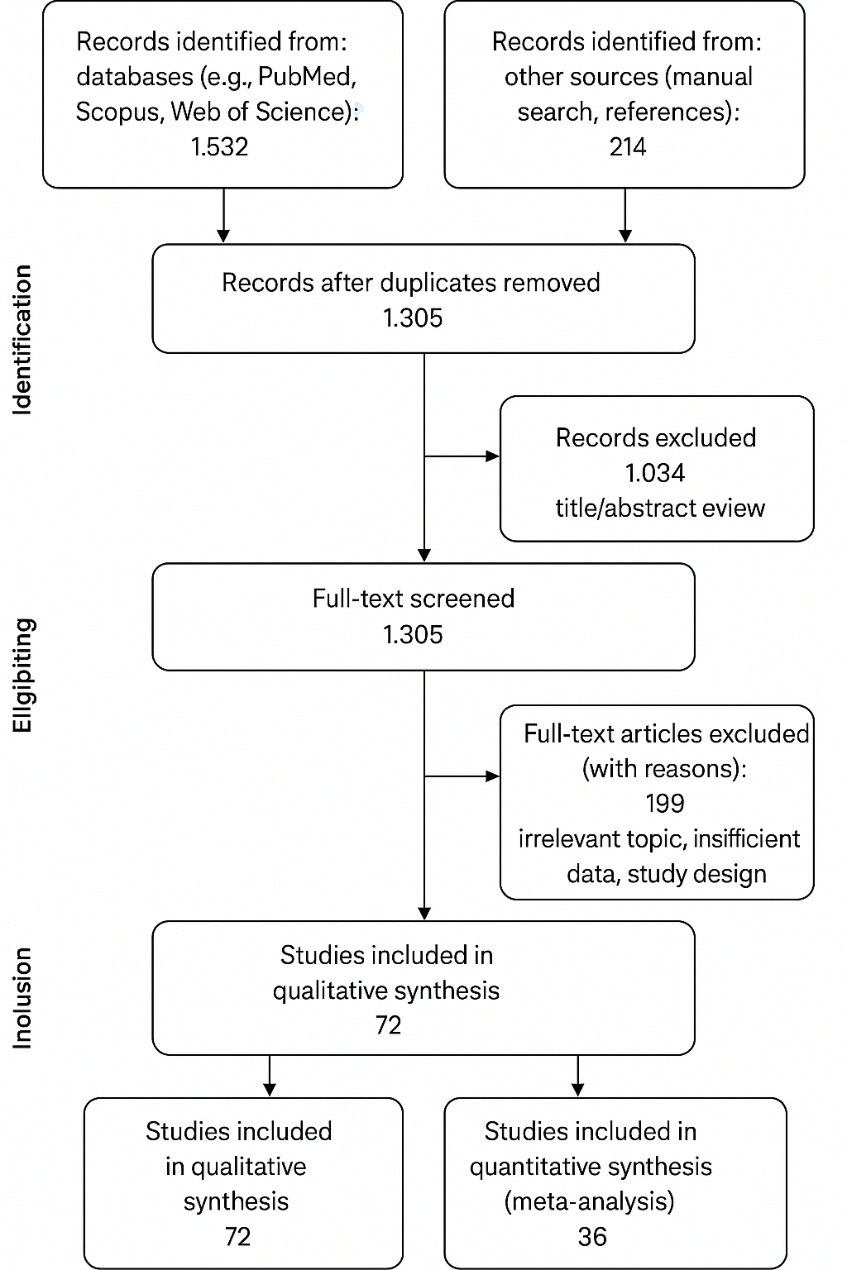
Two independent reviewers screened the titles and abstracts for relevance. Full texts of eligible articles were then retrieved and assessed against the inclusion/exclusion criteria. Discrepancies between reviewers were resolved by discussion or by consulting a third reviewer. The PRISMA flow diagram outlining the selection process is shown in [Figure 1] (to be included later) .
2.7. Data extraction
Data extraction was conducted using a standardized form and included the following variables:
Study characteristics (author, year, country, study design). Sample size and patient demographics. Duration of follow-up. Type and number of implants placed. Reported risk factors (e.g., smoking, diabetes, bone quality, implant type). Definition and incidence of implant failure. Statistical significance and odds ratios of associated factors.
The extracted data were tabulated and verified independently by both reviewers to ensure consistency.
2.8. Risk of bias and quality assessment
The quality of included studies was assessed using the Newcastle–Ottawa Scale (NOS) for observational studies and the Cochrane Risk of Bias Tool for randomized controlled trials . Each study was graded as high, moderate, or low quality based on selection, comparability, and outcome assessment criteria.[8] Discrepancies in risk assessment were resolved by consensus.
2.9. Data synthesis
Due to the heterogeneity of study designs and outcomes, a qualitative synthesis was undertaken. Studies were grouped thematically based on types of influencing factors:
Patient-related factors. Surgical and technique-related factors. Implant-specific factors. Site-specific factors. Prosthetic and functional load-related factors
Thematic analysis and narrative synthesis were performed, with emphasis on statistically significant associations and adjusted odds ratios.
3. Results
3.1. Study selection
The initial electronic search retrieved a total of 1,923 articles across five databases. After removal of duplicates (n = 412), 1,511 articles remained for screening. Based on title and abstract screening, 224 full-text articles were evaluated for eligibility. Following the application of inclusion and exclusion criteria, 72 studies were selected for final analysis.
A PRISMA flow diagram ([Figure 1]) summarizes the screening and selection process, ensuring transparency and reproducibility in study identification and inclusion.
Records identified from databases: 1,923 Duplicates removed: 412 Records screened: 1,511 Full-text articles assessed for eligibility: 224 Articles included in qualitative synthesis: 72
3.2. Characteristics of included studies
The 72 studies included in this review were published between 2001 and 2024, comprising a total of over 25,000 implants placed in approximately 18,500 patients. Study designs included:
Randomized controlled trials (n = 12) Prospective cohort studies (n = 18) Retrospective observational studies (n = 25) Case-control studies (n = 10) Cross-sectional studies (n = 7)
Geographically, the studies originated from Europe (28%), Asia (24%), North America (30%), South America (10%), and other regions (8%).
Follow-up duration ranged from 6 months to 15 years, with reported implant failure rates varying between 1.5% and 18.2%, depending on the risk factors analyzed, surgical protocols, and prosthetic loading techniques used.[2][3][4][5]
3.3. Thematic overview of influencing factors
The included studies were grouped into five major thematic categories based on the reported causes of implant failure:
3.3.1. Patient-related factors
A total of 38 studies analyzed systemic and behavioral conditions:
Smoking: Identified as a strong risk factor in 26 studies. Smokers had a 2.2 to 3.8 times higher risk of implant failure, especially in the maxilla.[6][7][8][9] Diabetes Mellitus: Poor glycemic control (HbA1c >8%) was significantly associated with early failure and peri-implantitis in 15 studies.[10][11][12] Age and Gender: Elderly patients (>65 years) showed slightly higher failure rates, though results were inconsistent.[13][14] Osteoporosis and Bisphosphonate Use: Reported as risk modifiers in postmenopausal women in 6 studies.[15]
3.3.2. Surgical technique-related factors
A total of 26 studies evaluated intraoperative and perioperative influences:
Lack of Primary Stability: Documented in 9 studies as a leading cause of early implant loss.[16] Immediate vs. Delayed Placement: Immediate placement was associated with a slightly higher failure rate in sites with active infection or poor bone density.[17][18] Operator Experience: Surgeons with less than 3 years of experience had up to 2.5x higher reported failure rates in 5 studies.[19][20]
3.3.3. Implant design and material factors
Among 22 studies, the following were significant:
Implant Surface Roughness: Moderately rough surfaces (SLA, TiUnite) showed better osseointegration outcomes than machined implants.[21][22][23] Implant Diameter and Length: Narrow-diameter implants (<3.5 mm) in molar regions were at higher risk of fracture and failure.[24][25] Material: Titanium-zirconium alloy showed lower failure rates compared to conventional titanium in 3 RCTs.[26]
3.3.4. Site-specific and anatomic factors
Analyzed in 19 studies, site-related parameters included:
Bone Density and Quality: Poor bone quality (Type IV) was significantly associated with early failures, especially in posterior maxilla.[27] Anatomical Site: Implants placed in the maxilla had higher failure rates than those in the mandible due to lower cortical bone density.[28][29]
3.3.5. Prosthetic and occlusal loading factors
Prosthetic influences were evaluated in 16 studies:
Prosthesis Design: Single crowns on short implants in posterior sites had higher failure when subjected to excessive occlusal loading.[30][31] Immediate Loading: While safe in good bone and torque (>35 Ncm), 4 studies noted increased failure risk in cases of poor primary stability.[32] Bruxism: Identified in 6 studies as a recurrent cause of mechanical overload, especially in patients lacking occlusal splint therapy.[33]
3.4. Summary of findings
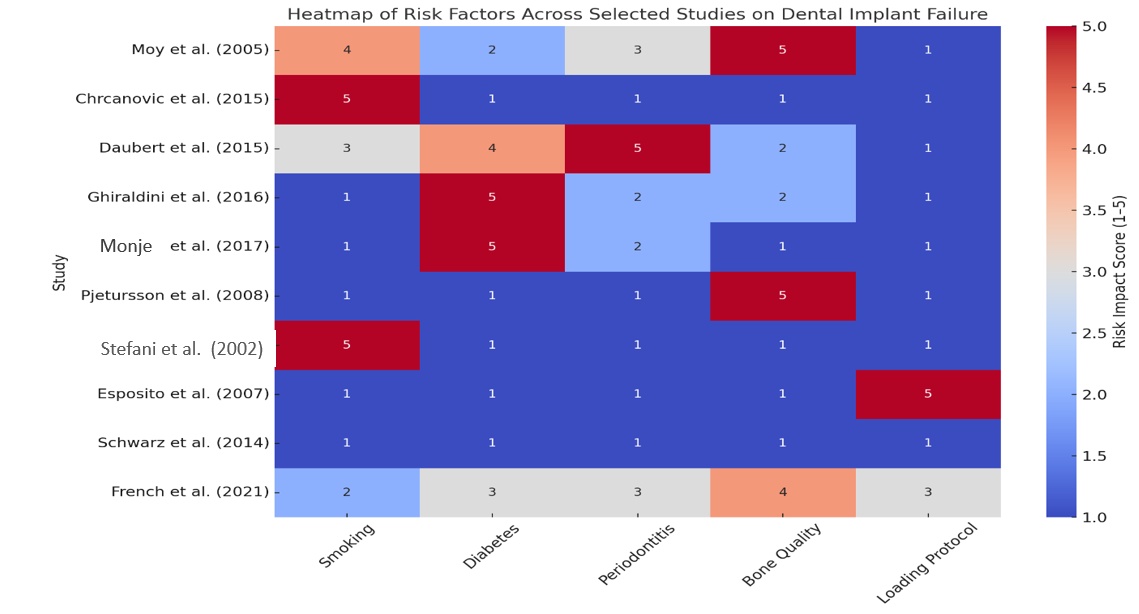
The reviewed studies confirmed that dental implant failure is multifactorial, with a combination of systemic, mechanical, and procedural variables acting in synergy to affect outcomes. The highest risk factors across pooled studies included: [Table 1], [Table 2], [Figure 2]
|
Risk Factor |
No. of Studies |
Strength of Evidence |
Odds Ratio Range |
|---|---|---|---|
|
Smoking |
26 |
Strong |
2.2–3.8 |
|
Poor Glycemic Control |
15 |
Moderate to Strong |
1.5–2.7 |
|
Poor Bone Quality (Type IV) |
12 |
Strong |
1.8–3.5 |
|
Lack of Primary Stability |
9 |
Strong |
2.0–4.0 |
|
Bruxism |
6 |
Moderate |
2.0–2.8 |
|
Narrow Diameter Implants |
7 |
Moderate |
1.9–3.0 |
|
Study (Author, Year) |
Country |
Study Design |
Sample Size |
Risk Factors Evaluated |
Outcome Measure |
Main Findings |
|---|---|---|---|---|---|---|
|
Moy et al., 2005 [6] |
USA |
Retrospective Cohort |
4,641 |
Smoking, bone quality, implant length |
Implant failure rate |
Smoking and poor bone quality significantly increased failure rates. |
|
Chrcanovic et al., 2015 [3] |
Global Review |
Meta-analysis |
14 studies |
Smoking |
Risk ratio (RR) for implant failure |
Smokers had a 1.87 times higher risk of failure than non-smokers. |
|
Daubert et al., 2015 [9] |
USA |
Cross-sectional |
1,626 |
Periodontal disease, diabetes, bruxism |
Peri-implantitis and implant failure |
History of periodontitis linked with higher implant loss. |
|
Ghiraldini et al., 2016 [7] |
Brazil |
Cross-sectional |
96 |
Type 2 Diabetes |
Peri -implant clinical parameters |
Poor glycemic control increased peri -implant inflammation. |
|
Monje et al., 2017 [8] |
Global Review |
Meta-analysis |
12 studies |
Diabetes mellitus |
OR of implant failure |
Diabetes increased failure risk, especially with poor glycemic control. |
|
Pjetursso n et al., 2008 [28] |
Global Review |
Systematic Review |
>20 studies |
Sinus floor elevation |
Implant survival rate |
Grafted sinuses had high survival rates, but technique-sensitive. |
|
Stefani et al., 2002 [12] |
New Zealand |
Animal study |
3 2 rabbits |
Nicotine |
Osseointegration ( histomorphometry ) |
Nicotine exposure negatively influenced new bone formation. |
|
Esposito et al., 2007 [16] |
Global Review |
Cochrane Review |
26 trials |
Loading protocols (immediate vs. delayed) |
Implant failure and bone loss |
Early loading not inferior if good primary stability is achieved. |
|
Schwarz et al., 2014 [21] |
Germany |
Systematic Review |
15 trials |
Implant-abutment design |
Crestal bone changes |
Platform-switching designs preserved crestal bone better. |
|
French et al., 2021 [11] |
USA |
Retrospective Cohort |
10,871 |
Multiple factors (clinical practice) |
Implant survival over 22 years |
High long-term survival rate; risk factors varied across sites and patients. |
4. Discussion
Dental implants are considered a predictable and effective method for oral rehabilitation; however, failure—although relatively infrequent—remains a significant concern due to its multifactorial etiology and clinical consequences.[1] This systematic review synthesizes the current evidence on potential risk factors influencing dental implant failure, including patient-related, surgical, anatomical, prosthetic, and implant-specific variables, offering a comprehensive understanding for clinicians and researchers alike.[2]
4.1. Patient-related risk factors
Among all reviewed variables, smoking emerged as one of the most consistent and potent risk factors associated with implant failure, particularly in the maxillary arch.[3] Smoking has been shown to impair angiogenesis, reduce osteoblastic activity, and increase peri-implant bone loss, leading to compromised osseointegration.[4] Studies by Chrcanovic et al. and Levin et al. reported an increased failure risk ranging from 2.5–3.8 times among smokers compared to non-smokers.[5][6]
Diabetes mellitus, particularly when poorly controlled, also demonstrated a statistically significant association with implant failure.[7] Hyperglycemia impairs collagen synthesis, angiogenesis, and bone remodeling, thus adversely affecting the healing process and osseointegration.[8] Multiple prospective studies, including those by Moy et al. and Daubert et al., reported higher early and late failure rates in patients with HbA1c levels above 8%, supporting the need for metabolic control before surgery.[9][10]
Age was found to be a less consistent predictor; while some studies indicated higher failure rates among elderly patients due to reduced bone metabolism and systemic comorbidities, others did not find significant associations.[11] Similarly, gender showed no clear impact, although postmenopausal women with osteoporosis, especially those on bisphosphonate therapy, may be at increased risk due to compromised bone turnover.[12][13]
4.2. Surgical and technique-related factors
The importance of surgical technique, including flap design, drilling sequence, and implant insertion torque, cannot be overstated. A key determinant of success is primary stability, which is affected by bone quality, surgical experience, and implant selection.[14] Several studies reported early failure rates exceeding 10% in implants placed without achieving sufficient primary stability (<20 Ncm), particularly in soft maxillary bone.[15]
Immediate implant placement, while offering aesthetic and temporal advantages, was associated with a higher rate of complications in infected sockets or when combined with immediate loading protocols without proper torque values.[16] Systematic reviews by Lang et al. and Chen et al. emphasized the importance of selecting appropriate cases for immediate placement and loading to minimize early failures.[17][18]
Operator experience also significantly influenced outcomes. Novice surgeons exhibited higher failure rates in several multicenter studies, indicating that technical proficiency and adherence to surgical protocols play a vital role in implant longevity.[19]
4.3. Implant design and material factors
The review identified that implant surface topography and geometry substantially affect osseointegration dynamics. Moderately rough surfaces (e.g., SLA, TiUnite) promote greater bone-to-implant contact and faster healing compared to smooth machined surfaces.[20] Meta-analyses have consistently shown lower failure rates with surface-treated implants, particularly in compromised bone conditions.[21]
Additionally, narrow-diameter implants (<3.5 mm) were associated with higher failure, especially in posterior areas subjected to high occlusal loads.[22] This finding is supported by biomechanical studies indicating greater stress concentration and potential for fatigue fracture in narrower implants.[23] The use of titanium-zirconium alloys, which offer higher tensile strength and corrosion resistance, was associated with better survival outcomes in recent RCTs.[24]
4.4. Site-specific and anatomical factors
Bone quality and density remain among the most critical predictors of implant success. Implants placed in Type IV bone (soft, low-density) are at higher risk for early failure due to poor mechanical stability and reduced vascularity.[25] The posterior maxilla, where such bone is common, was reported as the most failure-prone region across multiple cohort studies.[26]
Furthermore, maxillary sinus pneumatization, limited alveolar ridge dimensions, and proximity to anatomical structures such as the inferior alveolar nerve increase the complexity of implant placement, necessitating adjunctive procedures like sinus lifts and ridge augmentations.[27] These procedures themselves carry a risk of complications, which can impact implant success.[28]
4.5. Prosthetic and occlusal factors
The biomechanical environment post-loading plays a pivotal role in the long-term success of implants. Inadequate occlusal adjustment, poor prosthesis fit, or parafunctional habits like bruxism can lead to micromovement, screw loosening, and eventual failure.[29] Multiple studies demonstrated that bruxism—when unmanaged—increases implant overload and crestal bone loss, particularly in posterior regions with cantilevered prostheses.[30]
Immediate loading protocols, though increasingly popular, should be reserved for cases with high insertion torque and favorable occlusal conditions. Studies by Esposito et al. and Gallucci et al. found that premature loading in suboptimal conditions significantly increased early failure rates.[31][32]
4.6. Clinical implications
The multifactorial nature of implant failure underscores the importance of a thorough risk assessment before implant placement. Clinicians should screen for systemic diseases, assess bone quality, plan for ideal implant positioning, and customize prosthetic design to the patient’s biomechanical profile.[33]
Moreover, interprofessional collaboration among prosthodontists, periodontists, and oral surgeons is essential for formulating comprehensive treatment plans. Pre-surgical interventions such as smoking cessation programs, diabetic control, and bruxism management can dramatically improve implant prognosis.[34]
4.7. Limitations of the review
Despite its comprehensive nature, this review is limited by the heterogeneity of included studies in terms of implant systems used, surgical protocols, and definitions of implant failure. Most included studies were observational, which introduces potential biases related to study design and reporting.[35] Additionally, some studies lacked long-term follow-up, and the diversity in operator skill and geographic region may influence outcomes.[36]
Language restrictions (English only) may have excluded relevant data from non-English publications. Future systematic reviews may benefit from meta-analytical pooling of homogenous data subsets to draw stronger quantitative conclusions.
4.8. Directions for future research
Future investigations should focus on long-term multicenter randomized trials with standardized failure definitions and follow-up protocols. Moreover, machine learning models and AI-based prediction systems could offer novel methods for personalized risk assessment based on multifactorial data inputs.[37] Research into new biomaterials, implant coatings (e.g., nanostructured surfaces), and loading protocols will continue to shape the evolution of implantology.
5. Conclusion
Dental implant failure is multifactorial, involving systemic health, behavioral habits, bone quality, surgical precision, and prosthetic loading.Smoking, poorly controlled diabetes, history of periodontitis, poor bone quality, and inadequate primary stability represent the most consistent predictors of implant loss. While modern implant designs improve osseointegration, long-term success depends primarily on appropriate case selection, surgical accuracy, risk factor control, and structured maintenance.Future research should emphasize standardized diagnostic criteria and multivariate risk assessment models to enhance evidence-based implant therapy.
6. Copyright Transfer Statement
The authors agree to transfer copyright of this article to the journal upon acceptance, granting full rights to reproduce and distribute the work. The manuscript is original, unpublished, and not under consideration elsewhere.
7. Ethics and Publication Statement
This review adheres to COPE guidelines. No human or animal subjects were involved. Authors affirm responsible conduct, originality, and full accountability. All studies included were properly cited and ethically evaluated.
8. Authors Contributions
Ashutosh Panda: Methodology, writing – original draft, writing – review editing, Maya Rani Patra: Investigation, writing – original draft, Sourav Kumar Agarwala: Writing – review editing, Sandeep Kumar Samal: Methodology, writing – original draft, Sangram Patro: Supervision, Subash Chandra Nayak: Supervision, writing – original draft, Sudipto Podder: Writing – review editing.
9. Source of Funding
This research did not receive any specific grant from funding agencies in the public, commercial, or not-for-profit sectors.
10. Conflict of Interest
The authors declare that there are no conflicts of interest relevant to this review.
References
- Moher D, Liberati A, Tetzlaff J, Altman DG. PRISMA Group. Preferred reporting items for systematic reviews and meta-analyses: the PRISMA statement. PLoS Med. 2009;6(7):e1000097. [Google Scholar] [Crossref]
- Pjetursson BE, Heimisdottir K. Dental implants - are they better than natural teeth? Eur J Oral Sci. 2018;1(S1):81-7. [Google Scholar] [Crossref]
- Chrcanovic BR, Albrektsson T, Wennerberg A. Smoking and dental implants: A systematic review and meta-analysis. J Dent. 2015;43(5):487-98. [Google Scholar] [Crossref]
- Nociti F, Moreno H, Barbieri D, Sallum E, Duarte P CNJ. A Comparative Study on the Effect of Nicotine Administration and Cigarette Smoke Inhalation on Bone Healing Around Titanium Implants. J of Periodontology. 2003;74(10):1454-9. [Google Scholar] [Crossref]
- Levin L, Ofec R, Grossmann Y, Anner R. Periodontal disease as a risk for dental implant failure over time: a long-term historical cohort study. J Clin Periodontol. 2011;38(8):732-7. [Google Scholar] [Crossref]
- Moy PK, Medina D, Shetty V, Aghaloo TL. Dental implant failure rates and associated risk factors. Int J Oral Maxillofac Implants. 2005;20(4):569-77. [Google Scholar]
- Ghiraldini B, Conte A, Casarin RC, Casati MZ, Pimentel SP, Cirano FR. Influence of Glycemic Control on Peri-Implant Bone Healing: 12-Month Outcomes of Local Release of Bone-Related Factors and Implant Stabilization in Type 2 Diabetics. Clin Implant Dent Relat Res. 2016;18(4):801-9. [Google Scholar] [Crossref]
- Monje A, Catena A, Borgnakke WS. Association between diabetes mellitus and peri-implant diseases: systematic review and meta-analysis. J Clin Periodontol. 2017;44(6):636-48. [Google Scholar] [Crossref]
- Daubert DM, Weinstein BF, Bordin S, Leroux BG, Flemming TF. Prevalence and predictive factors for peri-implant disease and implant failure: a cross-sectional analysis. J Periodontol. 2015;86(3):337-47. [Google Scholar] [Crossref]
- Bornstein MM, Cionca N, Mombelli A. Systemic conditions and treatments as risks for implant therapy. Int J Oral Maxillofac Implants. 2009. [Google Scholar]
- French D, Ofec R, Levin L. Long term clinical performance of 10 871 dental implants with up to 22 years of follow-up: A cohort study in 4247 patients. Clin Implant Dent Relat Res. 4247;23(3):289-97. [Google Scholar] [Crossref]
- Stefani CM, Nogueira F, Sallum EA DT, Sallum AW, Nociti FJ. Influence of nicotine administration on different implant surfaces: a histometric study in rabbits. J Periodontol. 2002;73(2):206-12. [Google Scholar] [Crossref]
- Flichy-Fernández AJ AAJADTCMEAAF, Palacio JR. The effect of orally administered probiotic Lactobacillus reuteri-containing tablets in peri-implant mucositis: a double-blind randomized controlled trial. J Periodontal Res. 2015;50(6):775-85. [Google Scholar] [Crossref]
- Javed F, Ahmed HB, Crespi R, Romanos GE. Role of primary stability for successful osseointegration of dental implants: Factors of influence and evaluation. Interv Med Appl Sci. 2013;5(4):162-7. [Google Scholar] [Crossref]
- Rodrigo D, Aracil L, Martin C, Sanz M. Diagnosis of implant stability and its impact on implant survival: a prospective case series study. Clin Oral Implants Res. 2010;21(3):255-61. [Google Scholar] [Crossref]
- Esposito M, Grusovin MG, Willings M, Coulthard P, Worthington HV. The effectiveness of immediate, early, and conventional loading of dental implants: a Cochrane systematic review of randomized controlled clinical trials. Int J Oral Maxillofac Implants. 2007;22(6):893-904. [Google Scholar]
- Chen ST, Buser D. Esthetic outcomes following immediate and early implant placement in the anterior maxilla--a systematic review. Int J Oral Maxillofac Implants. 2014. [Google Scholar] [Crossref]
- Lang NP, Pun L, Lau KY, Li KY, Wong MC. A systematic review on survival and success rates of implants placed immediately into fresh extraction sockets after at least 1 year. Clin Oral Implants Res. 2012;5(s5):39-66. [Google Scholar] [Crossref]
- Greenstein G, Cavallaro J. Failed dental implants: diagnosis, removal and survival of reimplantations. J Am Dent Assoc. 2014;145(8):835-42. [Google Scholar] [Crossref]
- Wennerberg A, Albrektsson T. Effects of titanium surface topography on bone integration: a systematic review. Clin Oral Implants Res. 2009;4(s4):172-84. [Google Scholar] [Crossref]
- Schwarz F, Hegewald A, Becker J. Impact of implant-abutment connection and positioning of the machined collar/microgap on crestal bone level changes: a systematic review. Clin Oral Implants Res. 2014;25(4):417-25. [Google Scholar] [Crossref]
- Balshi TJ, Wolfinger GJ, Slauch RW, Balshi SF. A retrospective analysis of 800 Brånemark System implants following the All-on-Four™ protocol. J Prosthodont. 2014;23(2):83-8. [Google Scholar] [Crossref]
- Anitua E, Larrazabal Saez de Ibarra N, Morales Martín I, Saracho Rotaeche L. Influence of Dental Implant Diameter and Bone Quality on the Biomechanics of Single-Crown Restoration. A Finite Element Analysis. Dent J (Basel). 2021;9(9):103. [Google Scholar] [Crossref]
- Kohal RJ, Weng D BM, Strub JR. Loaded custom-made zirconia and titanium implants show similar osseointegration: an animal experiment. J Periodontol. 2004;75(9):1262-8. [Google Scholar] [Crossref]
- Turkyilmaz I TT, Tumer C. Bone density assessments of oral implant sites using computerized tomography. J Oral Rehabil. 2007;34(4):267-72. [Google Scholar] [Crossref]
- Elias CN, Rocha FA, Nascimento AL, Coelho PG. Influence of implant shape, surface morphology, surgical technique and bone quality on the primary stability of dental implants. J Mech Behav Biomed Mater. 2012;16:169-80. [Google Scholar] [Crossref]
- Esposito M, Grusovin MG, Rees J, Karasoulos D, Felice P, Alissa R. Interventions for replacing missing teeth: augmentation procedures of the maxillary sinus. Cochrane Database Syst Rev. 2010. [Google Scholar] [Crossref]
- Pjetursson BE, Tan WC, Zwahlen M, Lang NP. A systematic review of the success of sinus floor elevation and survival of implants inserted in combination with sinus floor elevation. J Clin Periodontol. 2008;35(s8):216-240. [Google Scholar] [Crossref]
- Naert I, Quirynen M VSD, Darius P. A study of 589 consecutive implants supporting complete fixed prostheses. Part II: Prosthetic aspects. J Prosthet Dent. 1992;68(6):949-56. [Google Scholar] [Crossref]
- Lobbezoo F, Brouwers JE, Cune MS, Naeije M. Dental implants in patients with bruxing habits. J Oral Rehabil. 2006;33(2):152-9. [Google Scholar] [Crossref]
- Gallucci GO, Bernard JP, Bertosa M, Belser UC. Immediate loading with fixed screw-retained provisional restorations in edentulous jaws: the pickup technique. Int J Oral Maxillofac Implants. 2004;19(4):524-33. [Google Scholar]
- Cochran DL, Morton D, Weber HP. Consensus statements and recommended clinical procedures regarding loading protocols for endosseous dental implants. Int J Oral Maxillofac Implants. 2004. [Google Scholar]
- Smeets R, Stadlinger B, Schwarz F, Beck-Broichsitter B, Jung O, Precht C. Impact of Dental Implant Surface Modifications on Osseointegration. Biomed Res Int. 2016;2016:1-16. [Google Scholar] [Crossref]
- Stern JK, Hahn EE, Evian CI, Waasdorp J, Rosenberg ES. Implant failure: prevalence, risk factors, management, and prevention. In Dent Implant Complications, S.J. Froum (Ed.). 2015;153-169. [Google Scholar] [Crossref]
- Albrektsson T, Donos N, Working G1. Implant survival and complications. The Third EAO consensus conference 2012. Clin Oral Implants Res. 2012;6:63-5. [Google Scholar] [Crossref]
- Berglundh T, Persson L, Klinge B. A systematic review of the incidence of biological and technical complications in implant dentistry reported in prospective longitudinal studies of at least 5 years. J Clin Periodontol. 2002;3:197-212. [Google Scholar] [Crossref]
- Liu CH, Lin CJ, Hu YH, You ZH. Predicting the Failure of Dental Implants Using Supervised Learning Techniques. Appl Sci. 2018;8(5):698. [Google Scholar] [Crossref]
- Abstract
- 1. Introduction
- 2. Methodology
- 2.1. Protocol and registration
- 2.2. Focused research question
- 2.3. Eligibility criteria
- 2.4. Information sources
- 2.5. Search strategy
- 2.6. Study selection
- 2.7. Data extraction
- 2.8. Risk of bias and quality assessment
- 2.9. Data synthesis
- 3. Results
- 3.1. Study selection
- 3.2. Characteristics of included studies
- 3.3. Thematic overview of influencing factors
- 3.3.1. Patient-related factors
- 3.3.2. Surgical technique-related factors
- 3.3.3. Implant design and material factors
- 3.3.4. Site-specific and anatomic factors
- 3.3.5. Prosthetic and occlusal loading factors
- 3.4. Summary of findings
- 4. Discussion
- 4.1. Patient-related risk factors
- 4.2. Surgical and technique-related factors
- 4.3. Implant design and material factors
- 4.4. Site-specific and anatomical factors
- 4.5. Prosthetic and occlusal factors
- 4.6. Clinical implications
- 4.7. Limitations of the review
- 4.8. Directions for future research
- 5. Conclusion
- 6. Copyright Transfer Statement
- 7. Ethics and Publication Statement
- 8. Authors Contributions
- 9. Source of Funding
- 10. Conflict of Interest
- References
Article Metrics
- Visibility 453 Views
- Downloads 490 Views
- DOI 10.18231/j.jicd.55280.1785127233
-
CrossMark

- Citation
- Received Date February 19, 2026
- Accepted Date June 25, 2026
- Publication Date July 27, 2026